

Technical Specification of B.E.T.A.
The B.E.T.A. System (Bio-engineered Encapsulation for Therapeutic Amyloid-protection) is a medical device uses bio-encapsulation technology designed for the transplantation of Islets of Langerhans into T1D patients to restore the beta cell activity. It has a duo-layer structure preventing immuno attack and metabolic toxicity
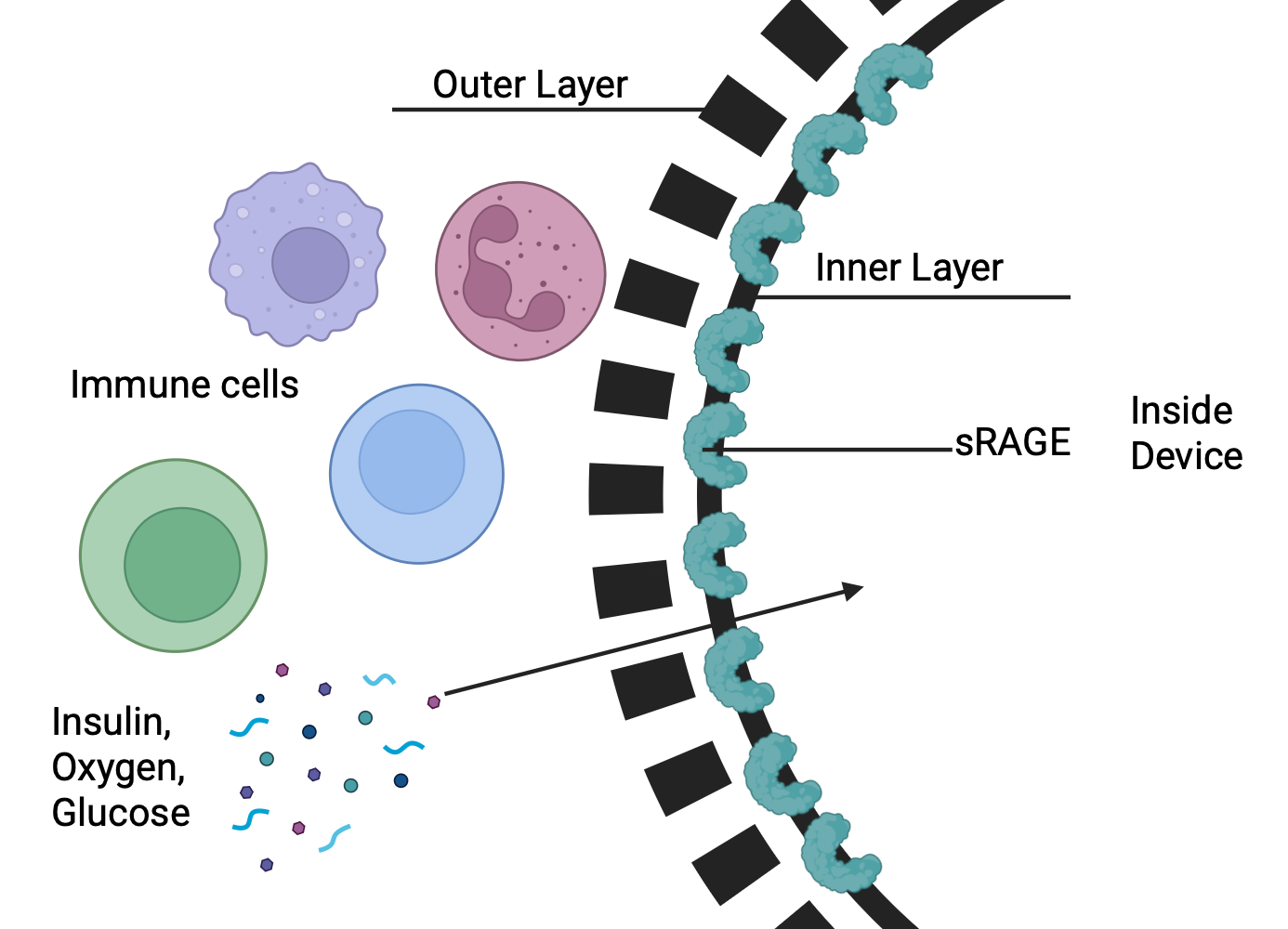
Fig 1. B.E.T.A. device structure illustration showing the semi-permeable membrane and the tethering of sRAGE to the inner layer
-
The outer shell is composed of semi-permeable membrane, with a mean pore size of 0.5 µm. This creates a size-exclusion barrier that blocks the host immune cells (around 20 µm for macrophage, 10 µm for T-cells) while allowing oxygen, glucose and insulin to pass through.
-
The inner layer is chemically modified with Recombinant Human sRAGE (Soluble Receptor for Advanced Glycation End-products), which has been designed to perform protease activity with specificity to amyloid by genetic engineering of Insulin-Degrading Enzyme (IDE) and sRAGE.
The B.E.T.A. Mechanism
-
IAPP is secreted by the beta cells.
-
The tethered sRAGE molecules on the capsule wall have a high binding affinity beta-sheet structures.
-
Because the molar density of sRAGE on the wall is engineered to be significantly higher than the density of RAGE receptors on the cell surface, the system shifts the thermodynamic equilibrium. IAPP oligomers preferentially bind to the wall rather than the cell.
-
Once bound to the wall, the amyloid is spatially seperated from the cells and broken down, preventing the immune response of cells.
Modulation of the RAGE Pathology
The clinical efficacy of the B.E.T.A. System is defined by its ability to silence the RAGE-NF-κB Inflammatory Cascade.
Normally, when amyloid oligomers bind to the cell-surface RAGE receptor, it triggers the autophosphorylation of the cytosolic tail. This recruits adaptor proteins and activates the MAPK (Mitogen-Activated Protein Kinase) pathway, as well as the activation of NF-κB (Nuclear Factor kappa-light-chain-enhancer of activated B cells). Active NF-κB moves into the nucleus, where it acts as a transcription factor, turning on genes for inflammatory cytokines (IL-1β, TNF-⍺) and oxidative stress markers, leading to intrinsic apoptosis (programmed cell death).
By physically trapping and breaking down the amyloid on the device wall, the B.E.T.A. System prevents the initial ligand-receptor interaction on the cell surface.
Result: The RAGE receptor on the cell stays un-activated.
Pathway Status: The NF-κB complex remains inactive in the cytoplasm (bound to its inhibitor, IκB). No inflammatory genes are transcribed.
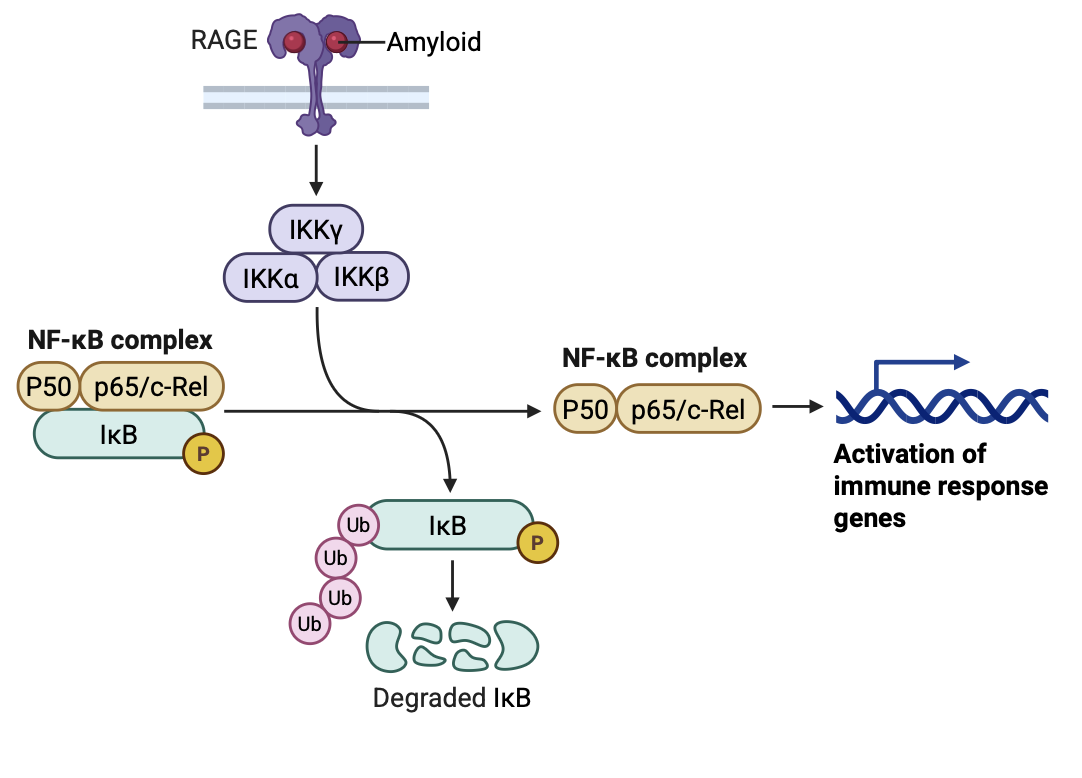
Fig 3. Activation of the RAGE-NF-κB signal pathway. By preventing ligand binding, the device suppresses the upregulation of inflammatory cytokines and oxidative stress.
Regulatory Notice: The B.E.T.A. System is an investigational medical device and is not currently approved for commercial sale or clinical use by the FDA or any other regulatory authority. All safety and efficacy claims on this website are based on theoretical modeling.